Background
In the summer of 2025, I participated in Katie Patrick’s School of Climate Action Design, for which we were tasked with applying behavioral science techniques to one climate project.
The Problem
The Problem
The meat industry is one of the largest contributors to global emissions, making eating plant-based one of the most impactful actions individuals can take for the climate.
Yet, meat is still central to many people’s diets.
How might we motivate people to change their diets through behavior science-backed techniques?
Creating a Strategy
To combat this large, daunting problem, I decided to start small and tangible by hosting a 7-day plant-based eating challenge with a community I was already a part of.
I targeted members of Climate Action Club in the Bay Area, since the group was made of young people passionate about the environment and still forming long-term habits.
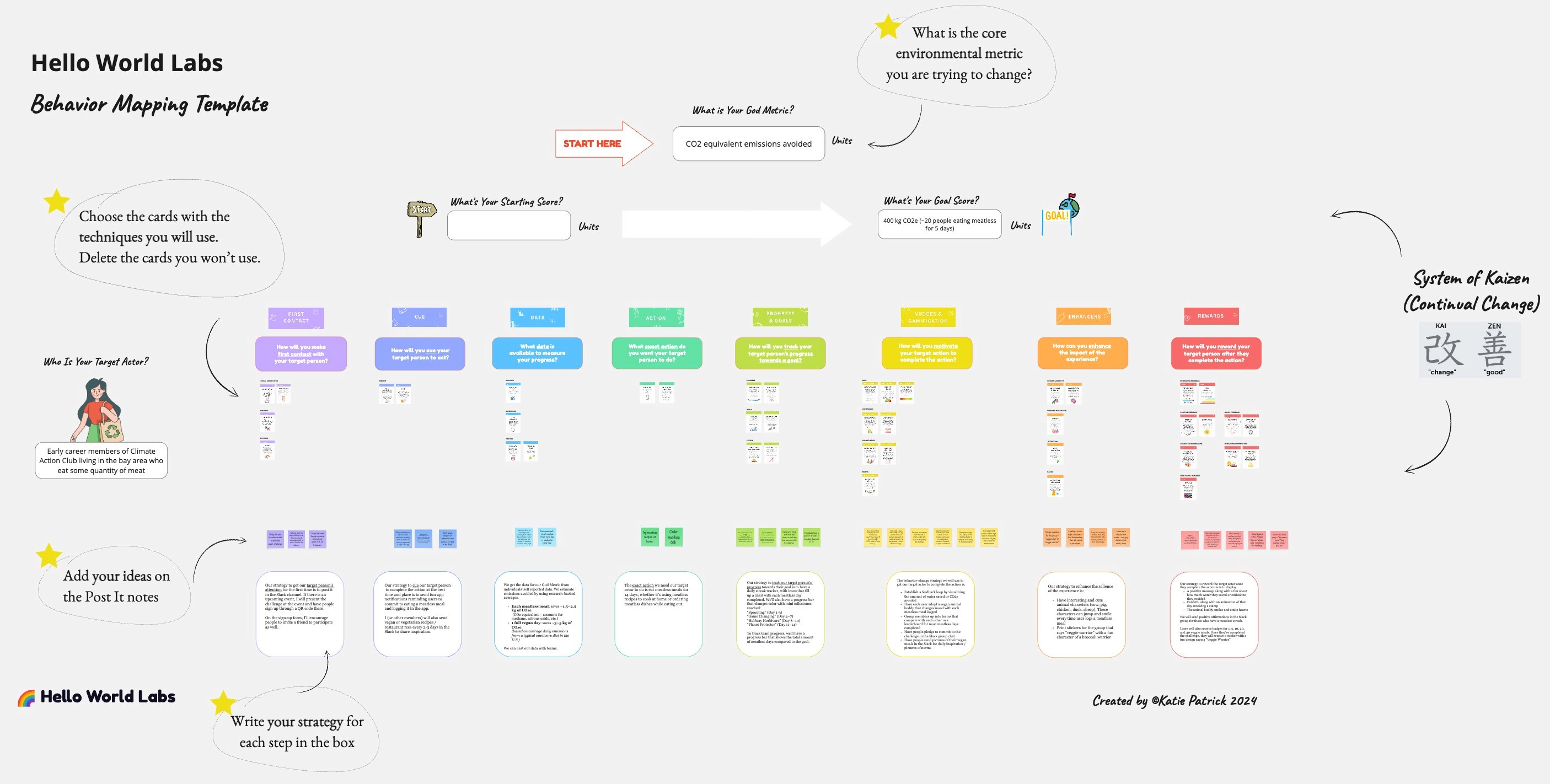
To flesh out a concrete strategy, I led a behavior-mapping workshop with my challenge co-leads, two other plant-eaters I recruited from the community.
Community Research and Engagement
To get at least 10 people to sign up to eat plant-based for 7 days, I knew I had to engage people with a compelling story.
I introduced the challenge in Slack using a hero’s journey narrative.
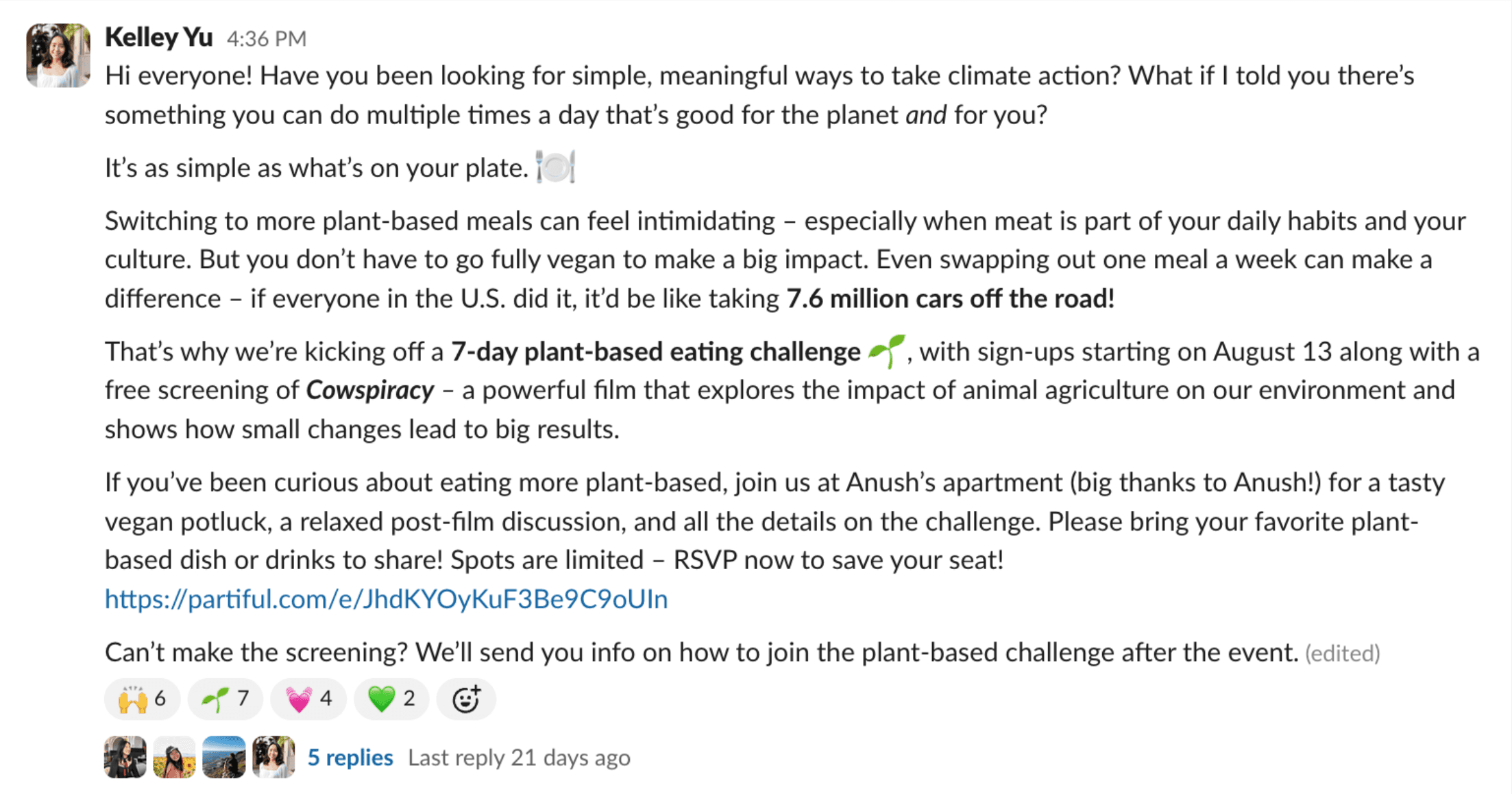
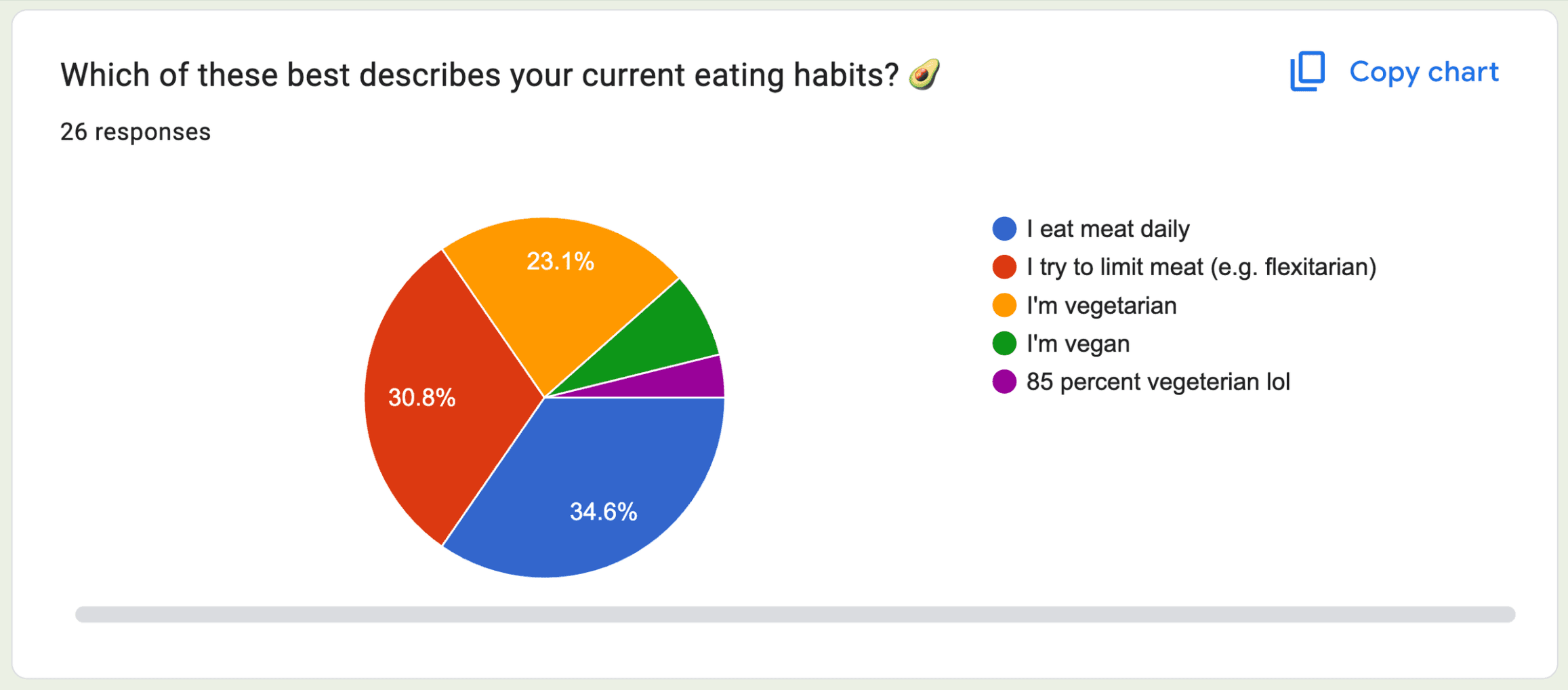
I then created a sign-up survey to:
Understand participants’ current eating habits and motivations
Create commitment by having individuals sign their names and pledge to complete the challenge
When sign-ups slowed, I added a reward: a custom embroidered Climate Action Club hat for the winner.
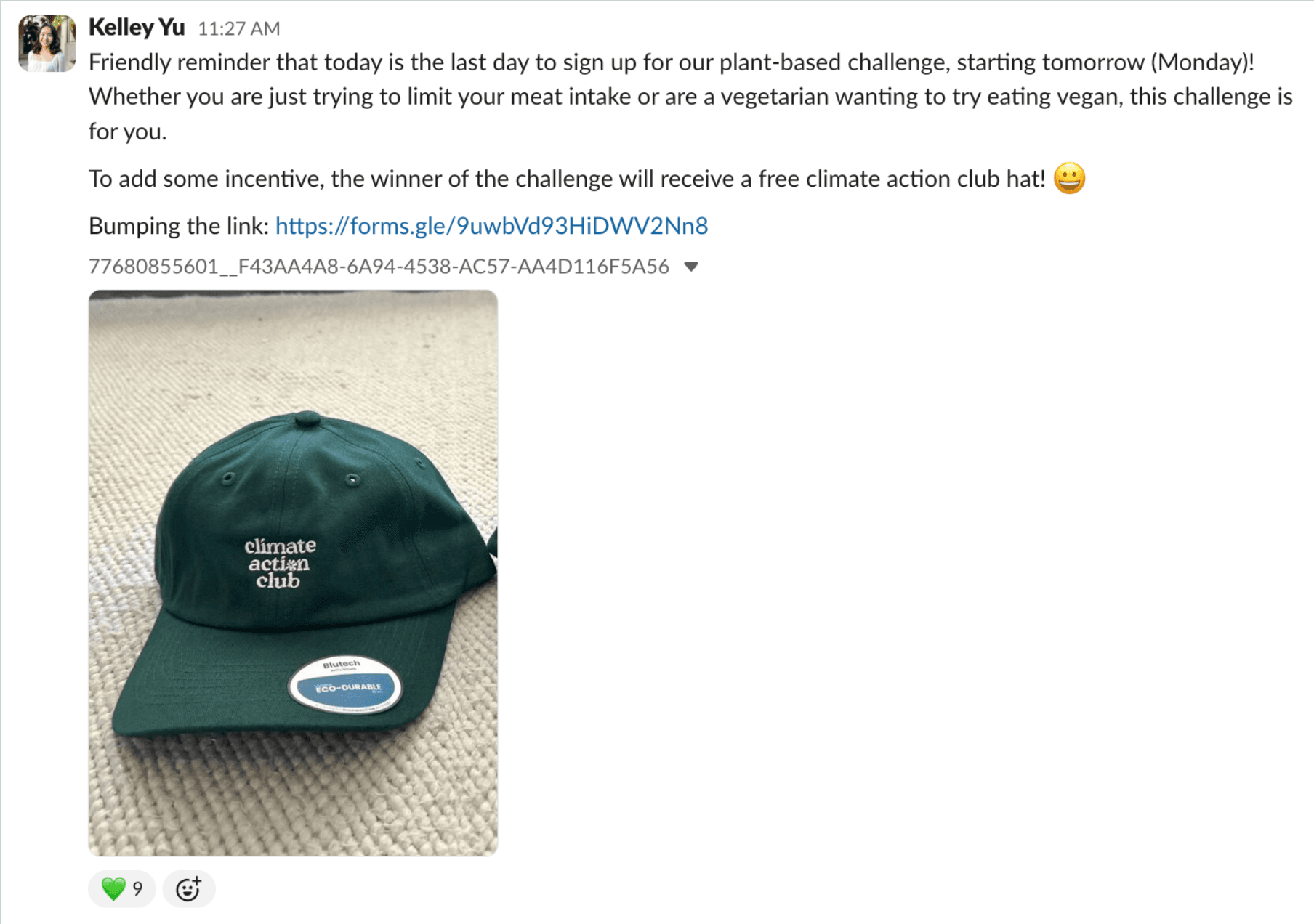
After introducing the reward, sign-ups doubled from 13 to 26.
Designing and Building the App
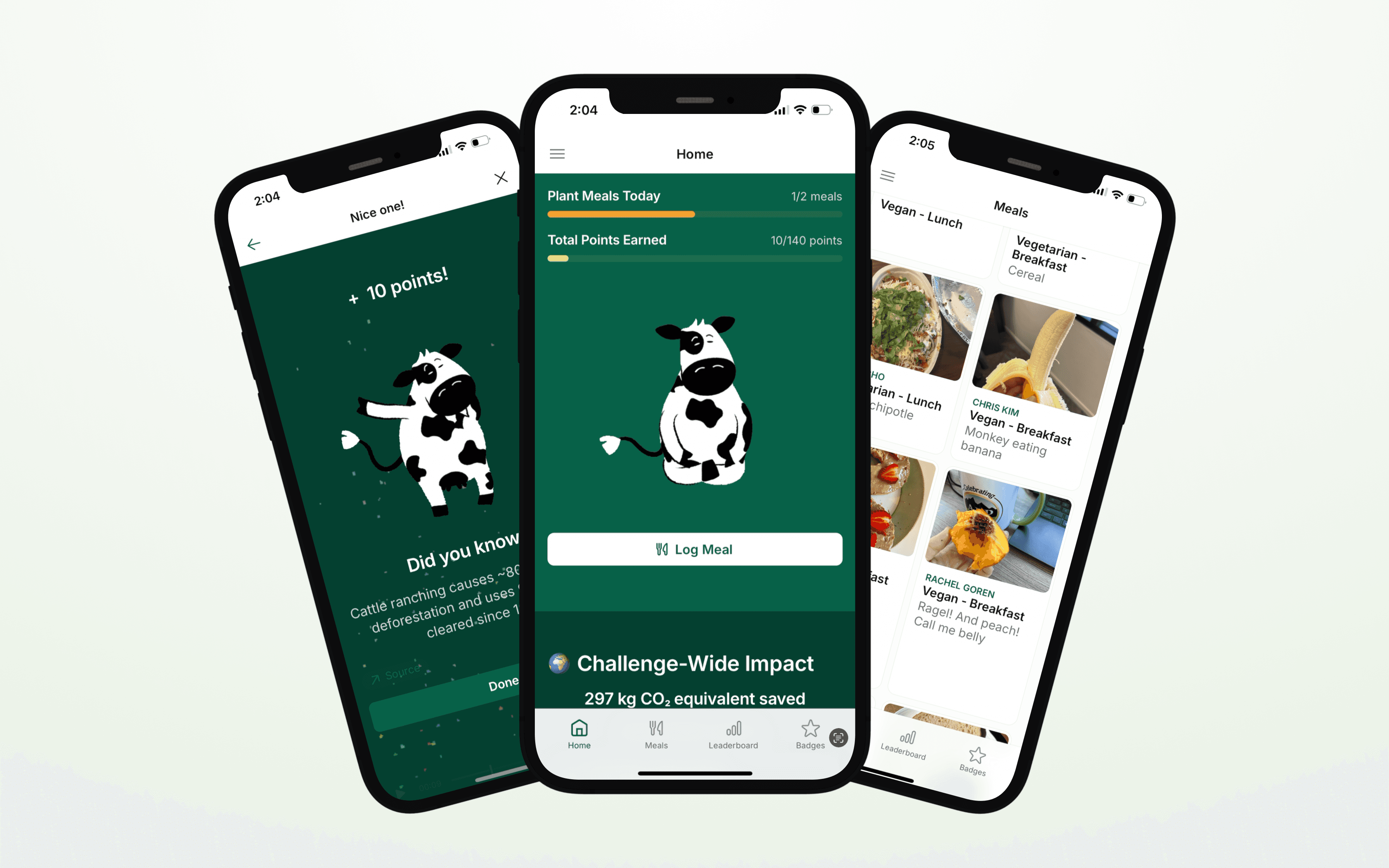
With less than a week before launch, I needed to quickly build a working product to support the challenge. I used Glide Apps along with ChatGPT to quickly build and launch an app within 4 days, supporting behavior change through:
Daily progress tracking
Social comparison
Motivation and rewards
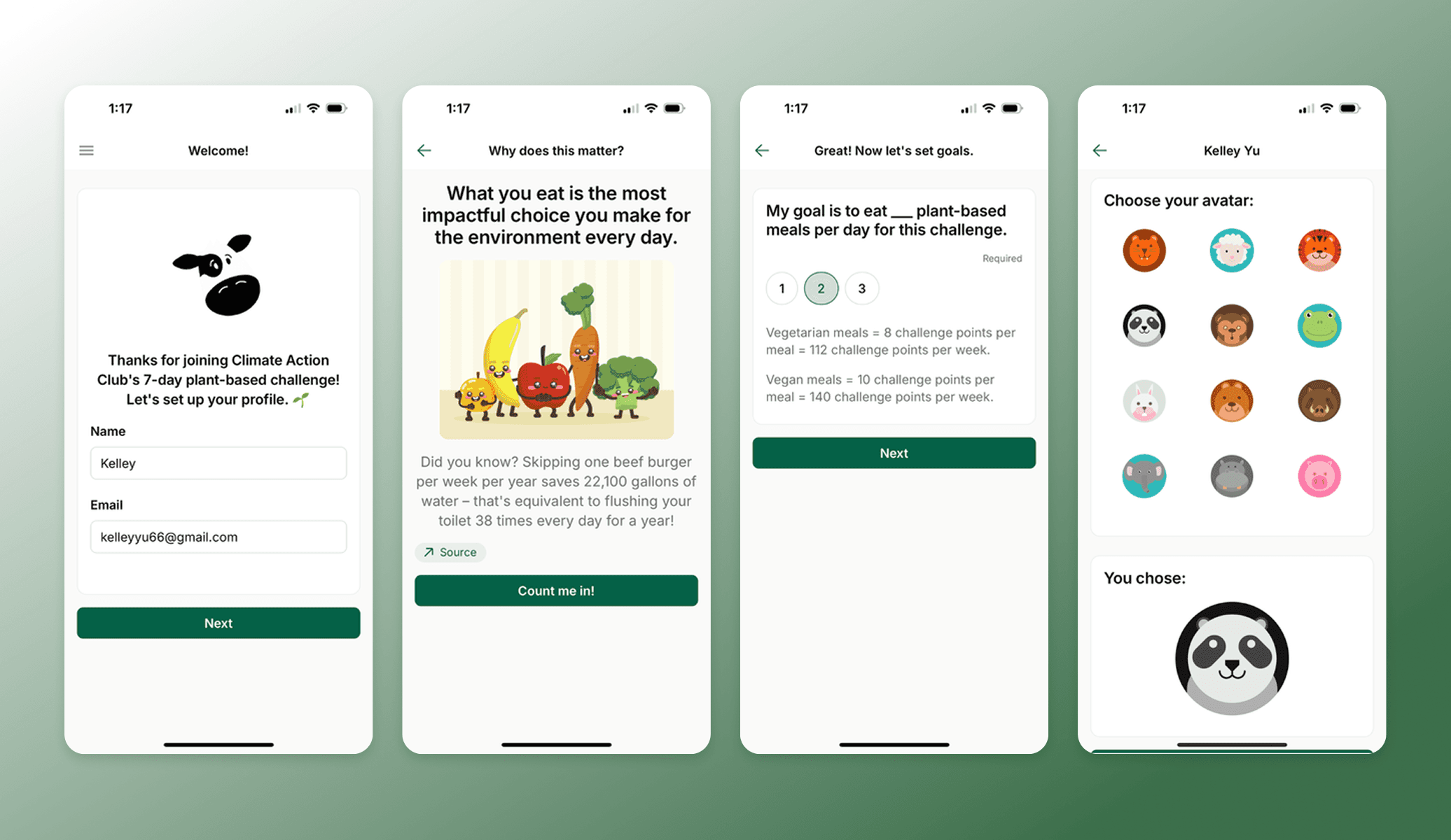
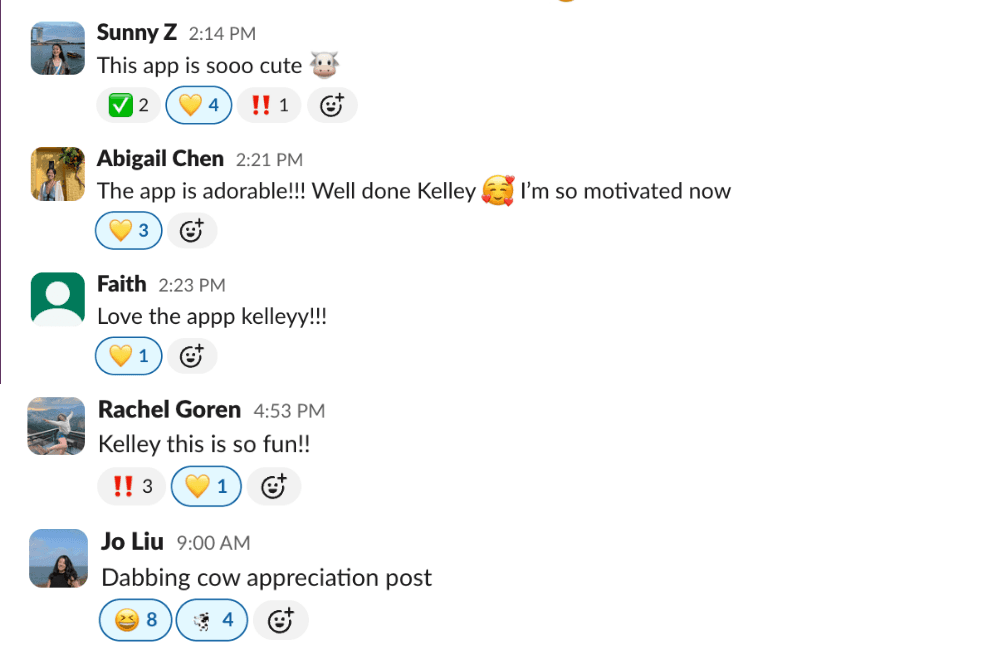
The app MVP was completed in time for launch and received overwhelmingly positive feedback. Participants shared comments like…
Launching the Challenge
I launched the 7-day challenge with the help of my vegan co-leads, and we had 24 participants onboarded.
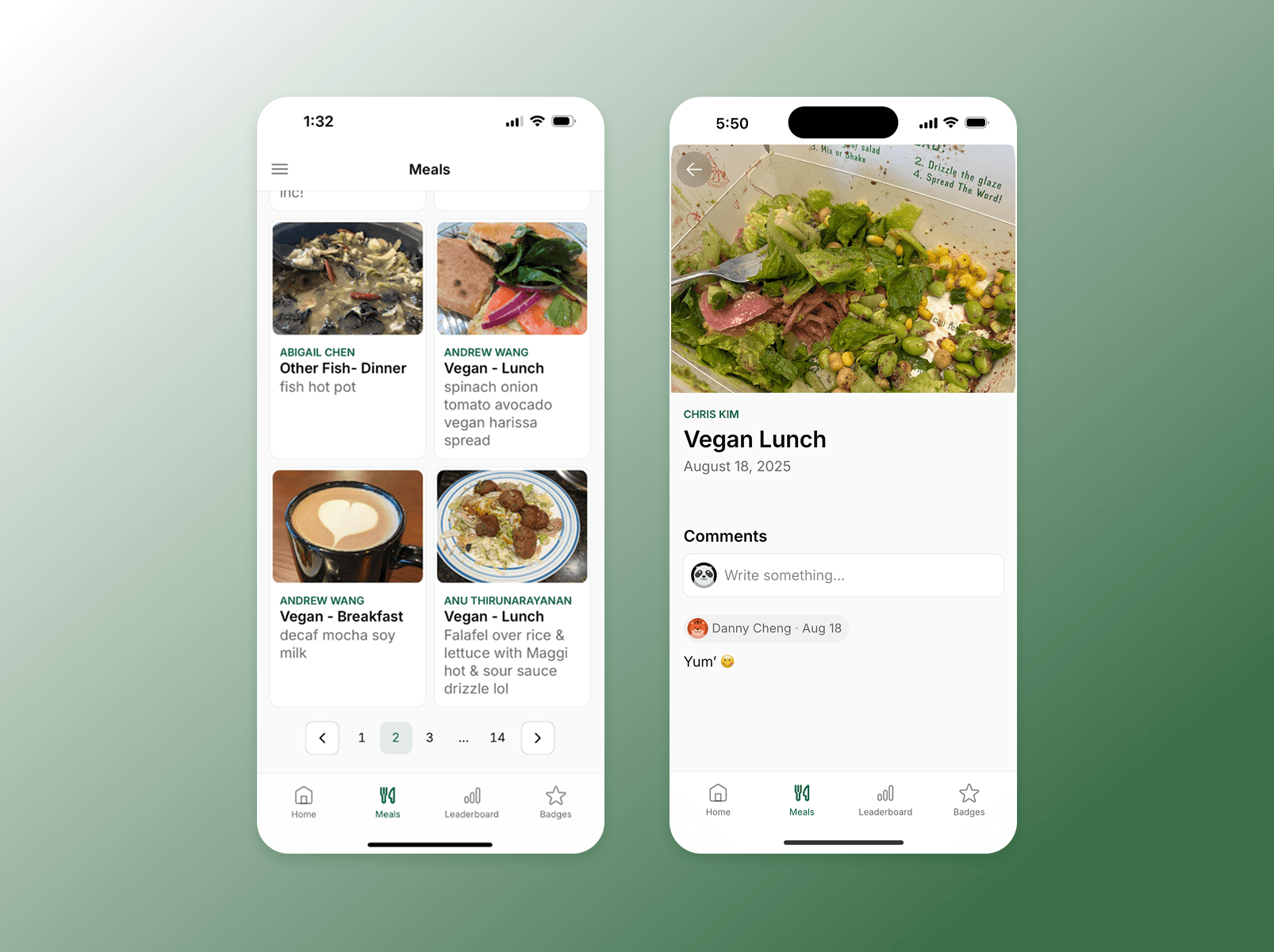
Early on, I noticed many users were curious about what other people were eating. In response, I added a community feed on day 1 that allowed users to upload meal photos and captions.
When I saw participants screenshotting and making funny comments on meals outside the app, I introduced an in-app commenting feature on day 2 to support native interaction.
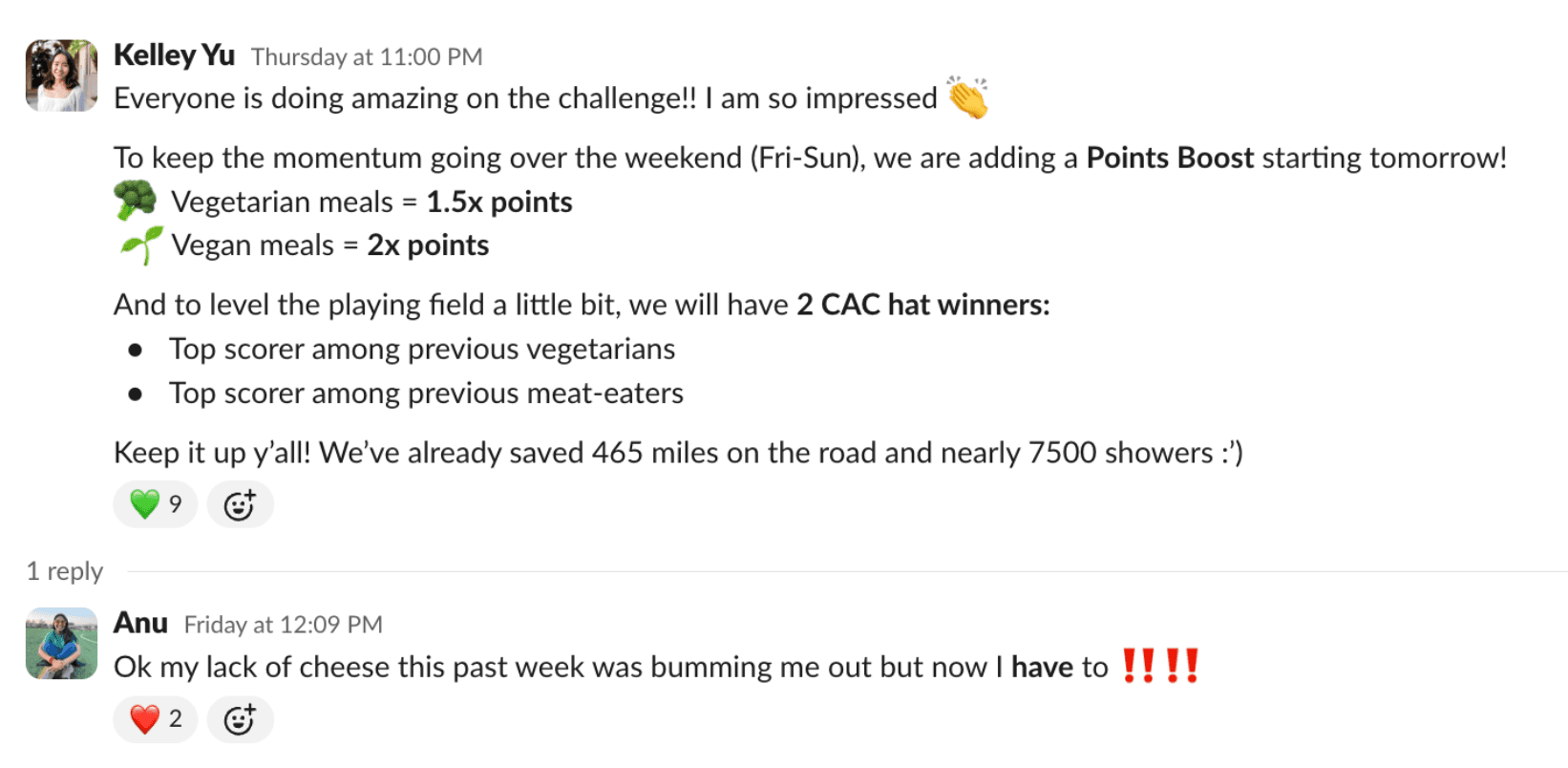
Midway through the challenge, I noticed a drop in motivation among participants who were falling behind on the leaderboard and felt they could no longer catch up. To address this, I introduced:
A weekend “points boost” (1.5x points for vegetarian, 2x points for vegan meals)
Two separate prize groups to balance fairness (former vegetarians vs non-vegetarians).
People stayed competitive and engaged throughout the week - frequently checking on their place in the leaderboard. The community feed became a key driver of participation and inspiration, and the points boost was also critical to increasing motivation for the weekend.
Final Results
Of the 24 participants, 14 completed the full 7-day challenge.
I awarded:
Two custom embroidered hats to winners (one was a former frequent meat eater)
Custom fridge magnets to all participants
The challenge also led to real impact:
298 kg CO2e saved ⋍
🚗 744 fewer miles driven
🌳 14 trees planted
🚿 11,908 showers saved
I personally moved toward a vegetarian diet, and others who participated also made small lifestyle changes:
“I was going to order a beef bowl but chose a tofu bowl instead after remembering the challenge”
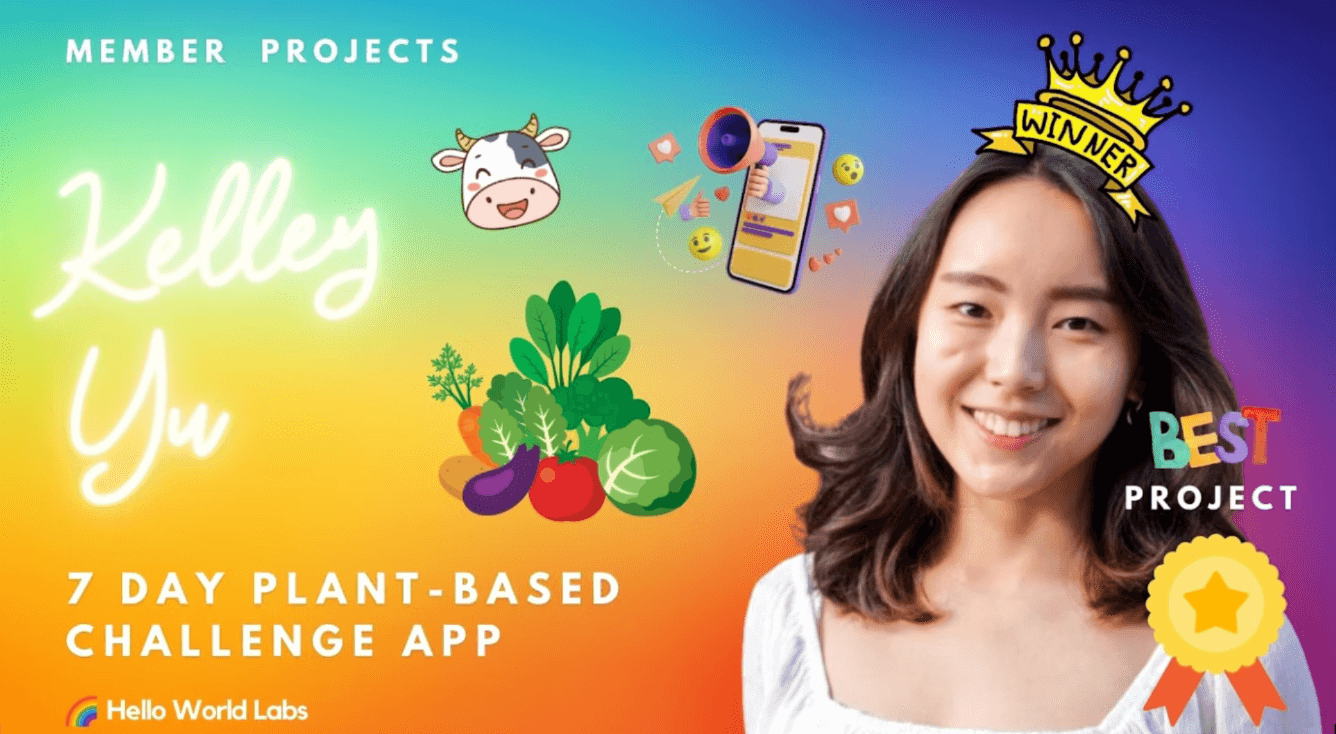
The project was recognized as the Winning Project of 2025, showing that a short behavioral intervention can lead to real diet changes and real impact.
What I learned
Gamification is highly effective! The leaderboard, rewards, progress tracking, and playful animations drove engagement throughout the week.
Small interventions added up. Even a short challenge like this was enough to spark longer-term behavior change for some participants.
Motivation was uneven. Participants lower on the leaderboard tended to disengage over time.
What I’d do differently next time
Have participants calculate their starting emissions to more precisely measure imipact and change
Introduce another layer of team competition for accountability and social support
Add daily novelty such as mini-challenges to sustain momentum
Make onboarding experience more robust and self-explanatory for people who are viewing the app with no context